Documentation Index
Fetch the complete documentation index at: https://docs.usemomo.com/llms.txt
Use this file to discover all available pages before exploring further.
Auto indexing and extraction
Momo doesn’t rely on the user to manually add memories. Instead, we built a connector that automatically extracts “decision” memories on behalf of the user. These decisions are solely based on the user’s inputs made in each of the apps. For example, for Gmail connector, it would be based on the emails that the user sent. For Github, the commits and PRs made, for Notion, pages that were created or edited.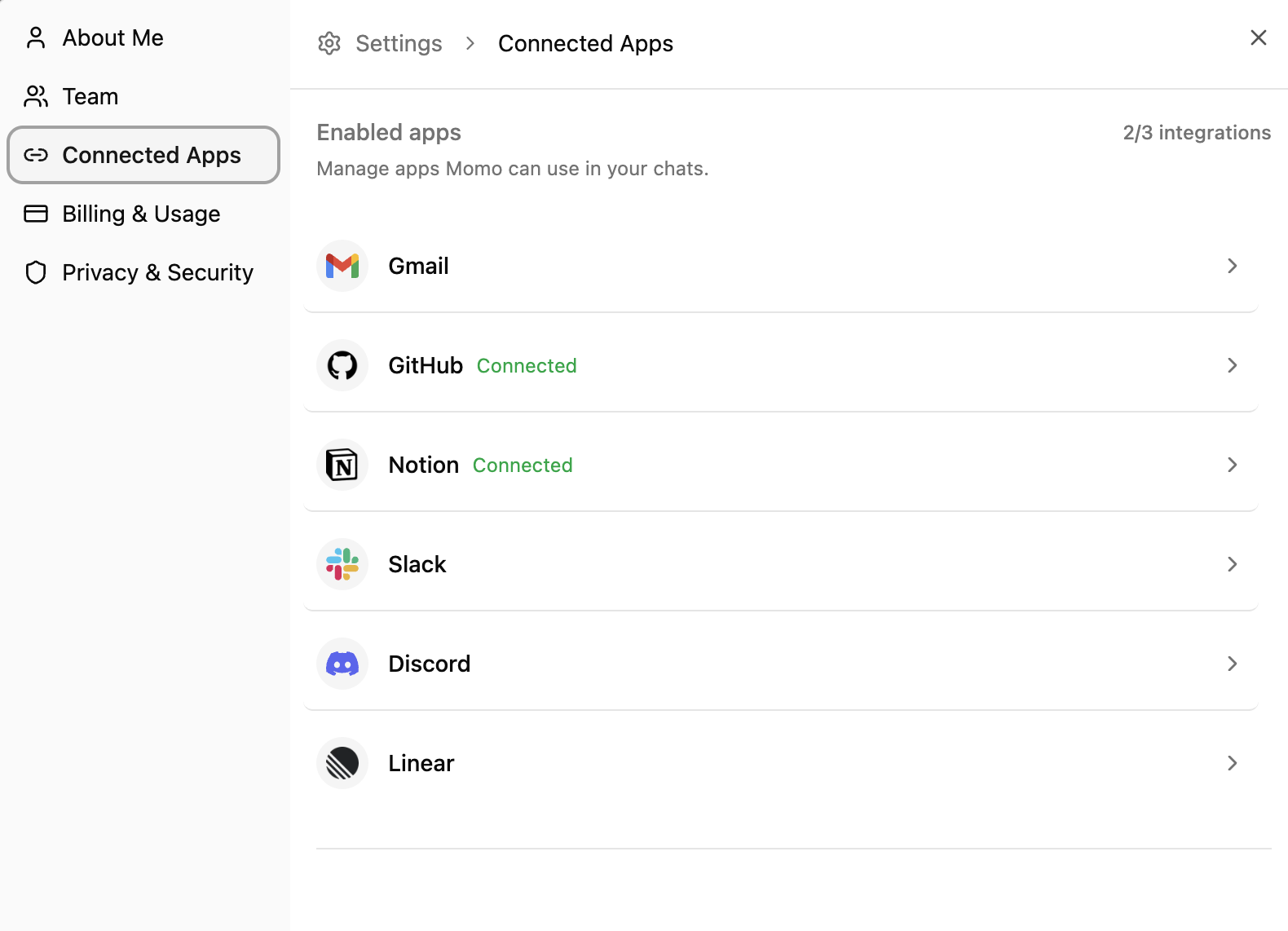
Establishing relationships
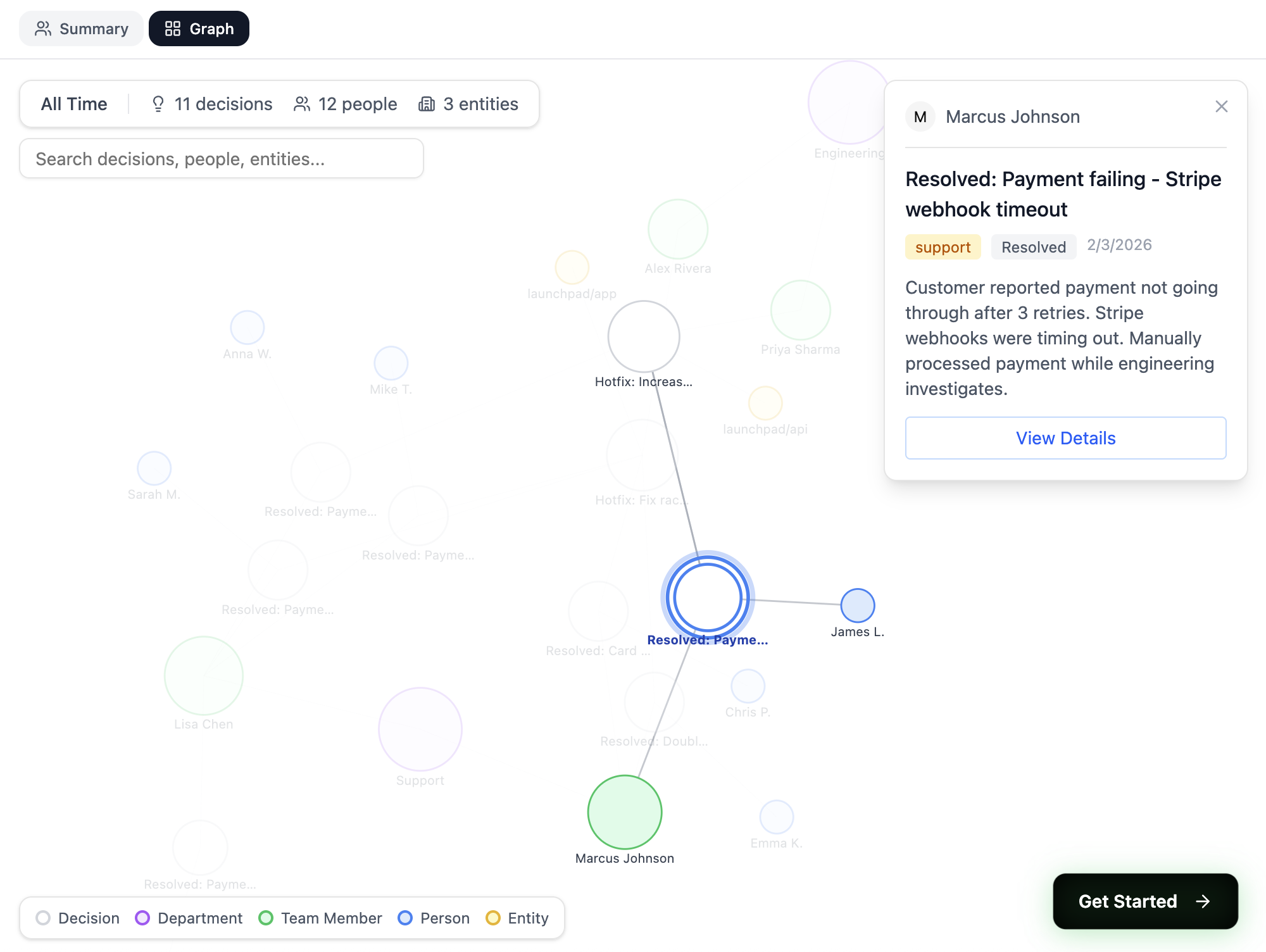
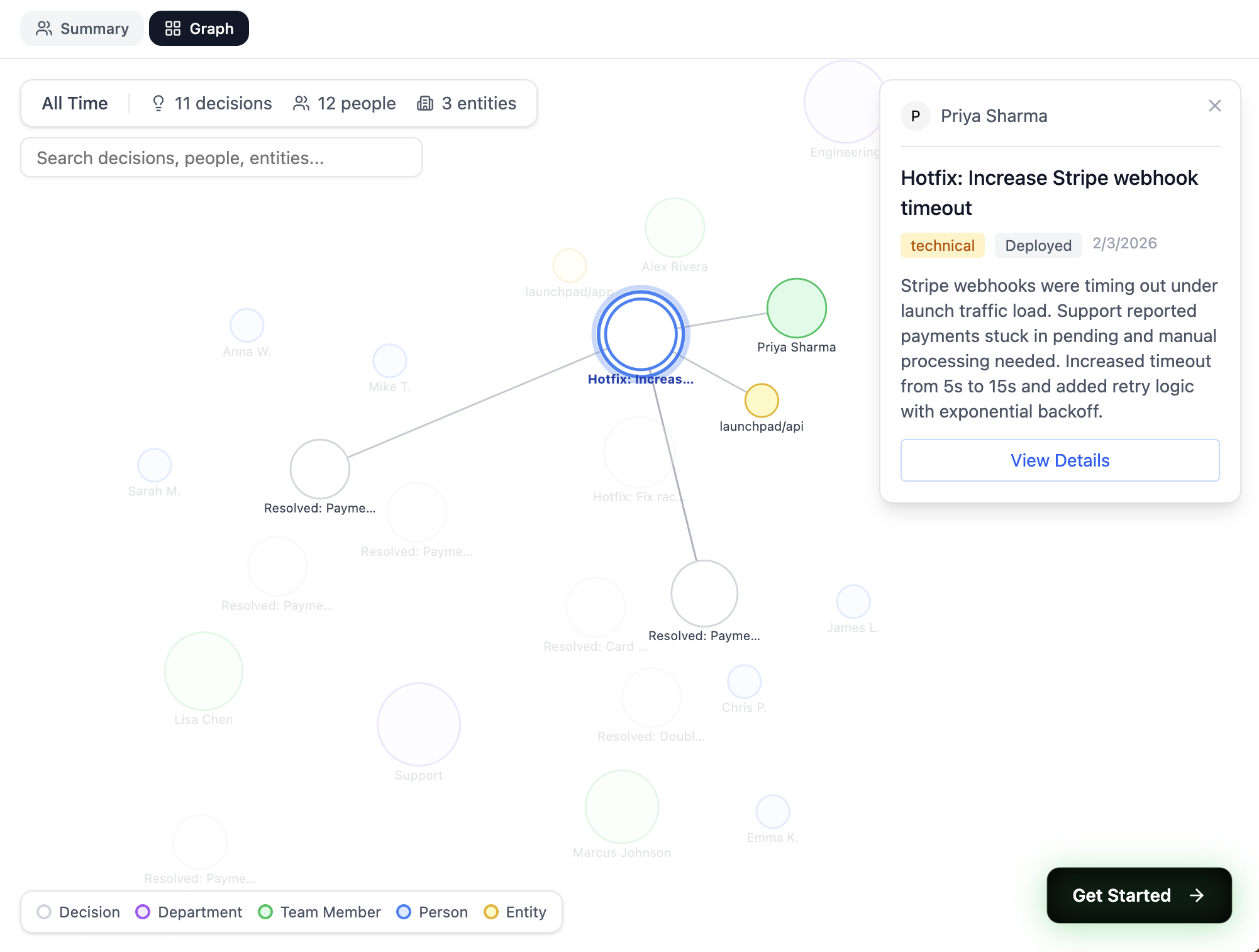
During extraction, Momo extracts each decision as a universal data structure. For each decision, the decision summaries, related entities, people, and the source metadata are saved and updated to the knowlege graph. Because decisions from Gmail, Notion, Slack, etc. maintain the same data structure, any decisions that have the same people or entities are linked together as an edge in the memory graph. Once that’s established, if you search for a specific person or entity, all relevant decisions immediately show up.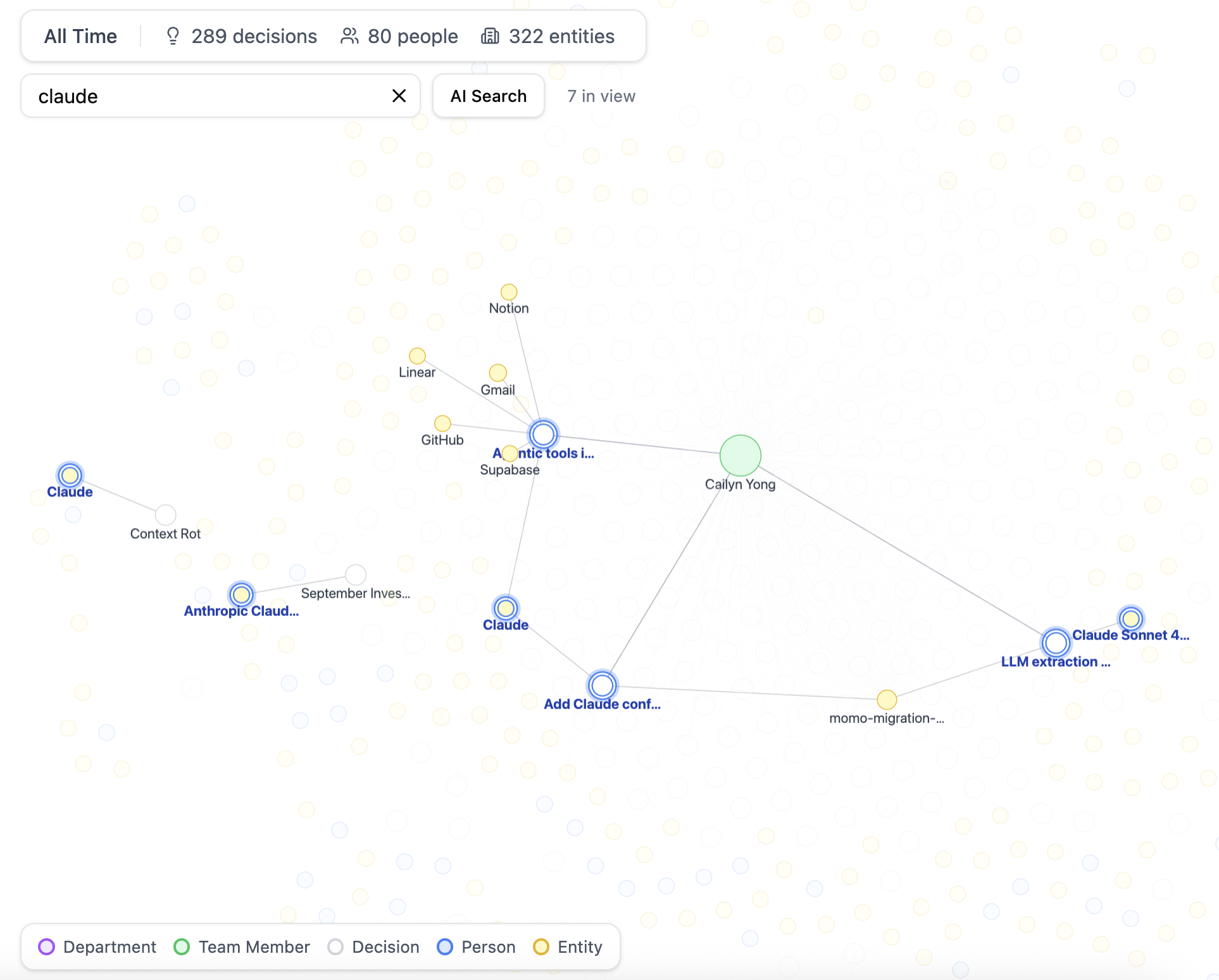
Team sync and filtering
The real value of Momo is when a team workspace is created, and you start connecting your work kwowledge graph with other teammates. In this example, you can see that two teams are created (Engineering, Support), and the relevant members are linked with an edge.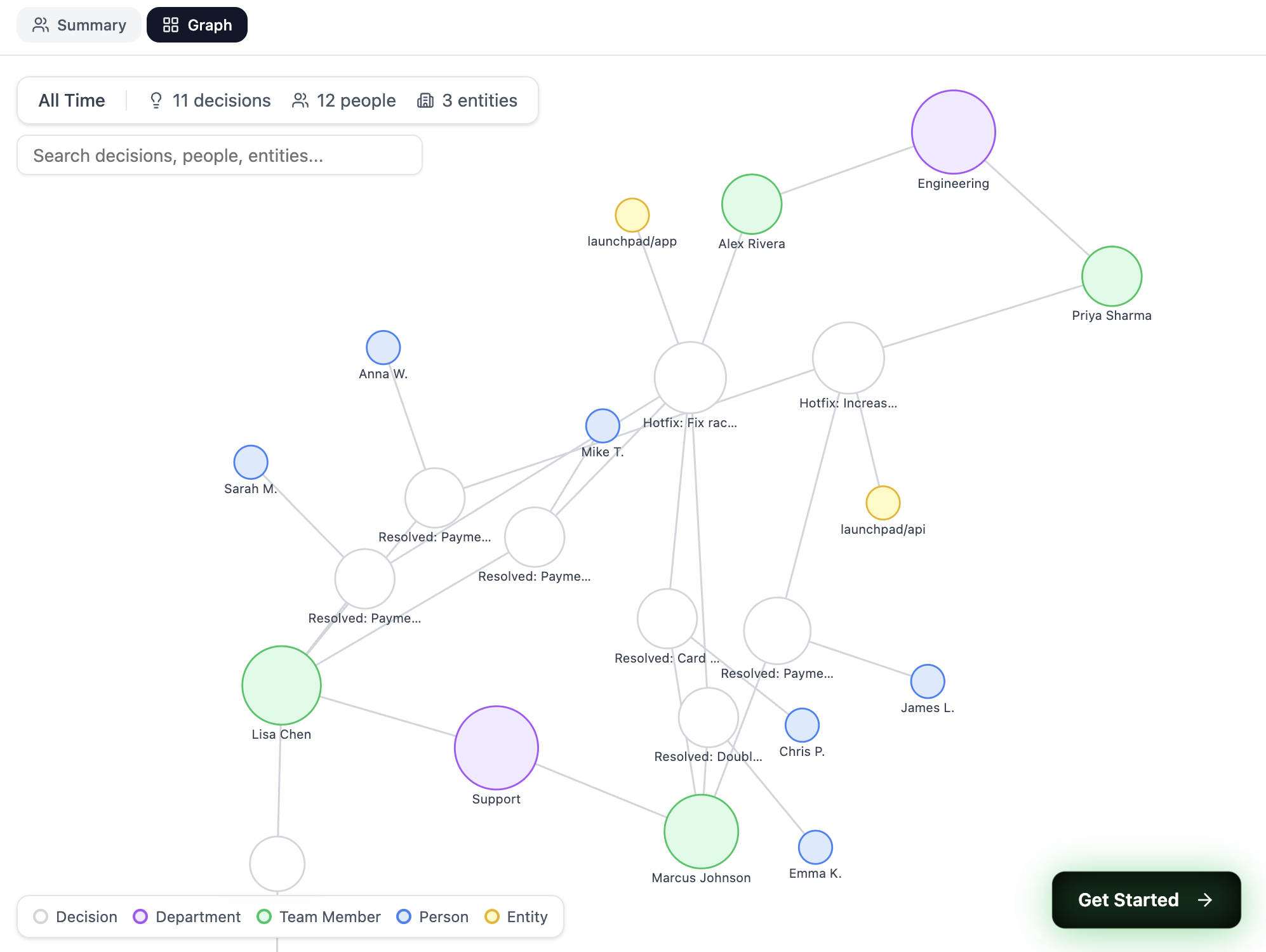
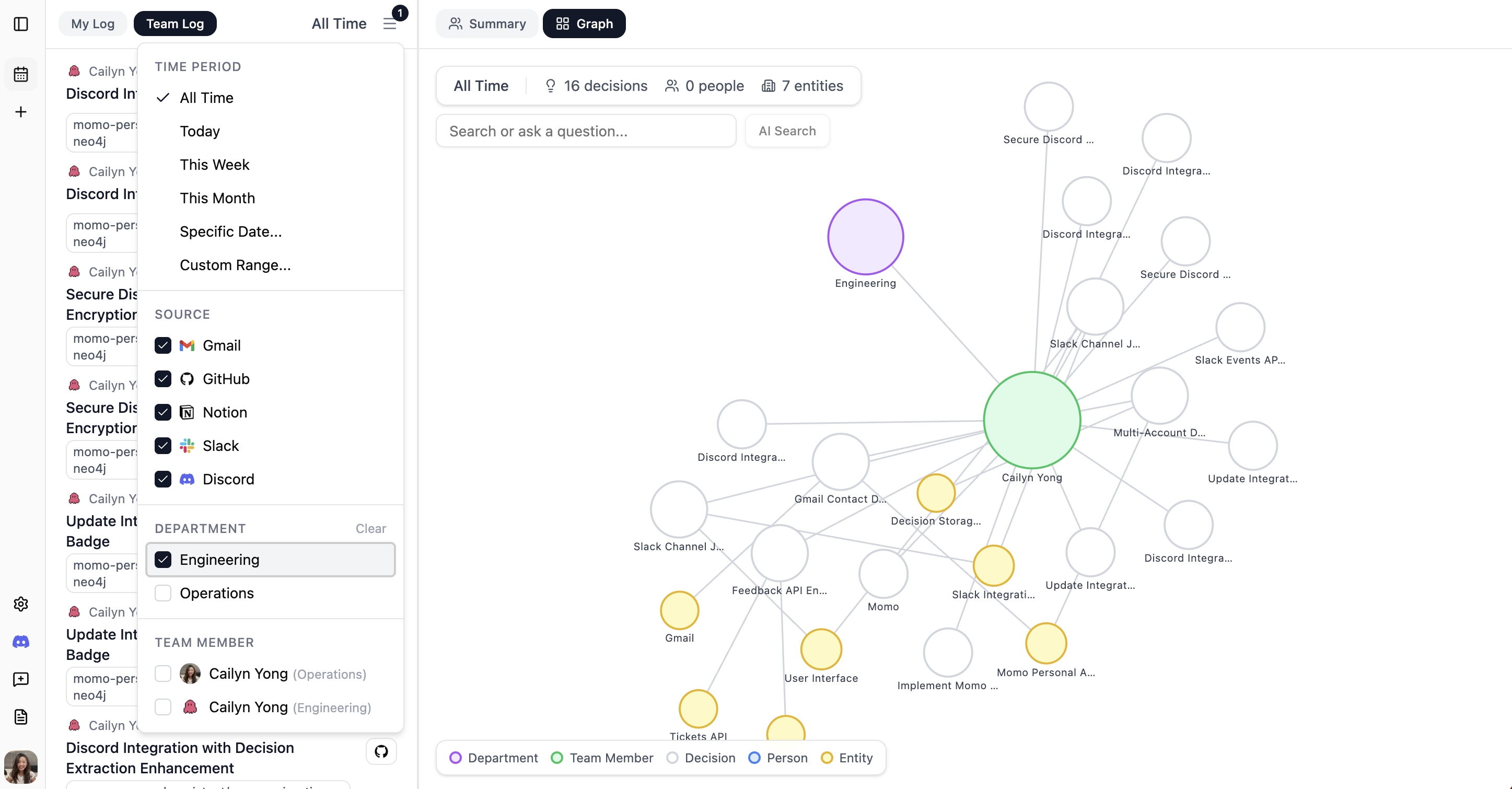
- time period
- sources
- departments
- team members